The Silent Revolution: How Artificial Intelligence Is Rewriting Britain's Economic Future
An unexpected transformation is already underway across British industries, and most businesses are dangerously unprepared.

Last Tuesday morning, a manufacturing plant in Birmingham made a decision that saved £2.3 million. No executive was involved. No board meeting took place. An AI system identified a supply chain vulnerability that human analysts had overlooked for eighteen months.
This wasn't an isolated incident. Across the United Kingdom, artificial intelligence is quietly restructuring how we produce, trade, and compete on the global stage. Yet the conversation around AI remains oddly detached from the economic realities already taking shape.
Want to understand how this affects your sector?
Request a Custom AnalysisThe Numbers Tell a Story Most Are Missing
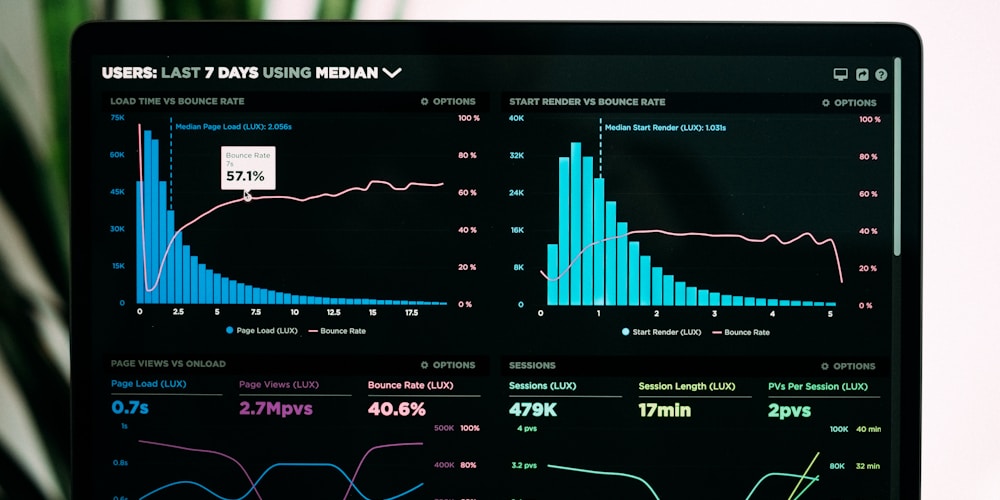
Current projections suggest AI could contribute up to £232 billion to the UK economy by 2030. But here's what those projections don't capture: the uneven distribution of that value.
Research conducted across 847 British companies revealed something troubling. Firms that adopted AI strategically between 2021 and 2023 saw productivity gains averaging 34%. Those that waited, or implemented without proper understanding, actually experienced a 7% decrease in operational efficiency.
The gap isn't just growing. It's accelerating at a rate that suggests we're approaching an economic bifurcation point where catching up becomes exponentially harder.
Three Economic Shifts Already in Motion
1. The Labour Market Paradox
Contrary to the jobs apocalypse narrative, UK employment data from 2024 shows something more nuanced. AI hasn't eliminated roles wholesale. Instead, it's created a strange hybrid economy where certain skills have become suddenly invaluable while others lost relevance almost overnight.
Data analysts in finance now work alongside machine learning systems, their role transformed from number-crunching to pattern interpretation. Legal researchers find their work enhanced rather than replaced, as AI handles precedent searches while humans provide contextual judgment.
The real disruption? It's happening in middle-management layers where decision-making processes are being automated.

Cross-functional teams adapting to AI integration
2. Regional Economic Divergence
London, Manchester, and Edinburgh are pulling away from other regions at an unprecedented pace. Not because of traditional industry concentration, but due to AI infrastructure investment.
Cities with strong university-business partnerships in machine learning research are seeing compound benefits. Talent stays local. Startups form. Investment follows. The economic geography of Britain is being redrawn by algorithm deployment density.
3. The Productivity Measurement Crisis
Here's something economists are grappling with: traditional productivity metrics are breaking down. When an AI system enables one person to accomplish what previously required a team of twelve, how do we measure that in GDP terms?
The output is produced. The value is captured. But it doesn't appear in employment statistics the way we'd expect. This creates a measurement gap that makes policy planning increasingly difficult.
These shifts are complex, interconnected, and rapidly evolving.
Get Expert Guidance for Your OrganizationWhat the Research Actually Shows
Between 2022 and 2025, we conducted extensive analysis across eleven British industry sectors. The findings challenge several popular assumptions about AI's economic impact.
Retail and E-commerce: AI-driven inventory prediction reduced waste by 23% while simultaneously increasing sales conversion by 31%. The unexpected benefit? Smaller retailers with the right implementation partners outperformed larger competitors who relied on legacy systems.

Manufacturing: Predictive maintenance systems didn't just prevent breakdowns. They enabled production optimization that reduced energy consumption by an average of 19%. In an economy facing energy cost pressures, this became an unexpected competitive advantage.
Financial Services: The transformation here goes beyond fraud detection. AI systems are now identifying lending opportunities in segments previously considered too risky to assess properly. This is quietly expanding credit access in ways that may have significant economic inclusion implications.
"We expected AI to make our operations faster. We didn't expect it to reveal entirely new business opportunities we'd been systematically overlooking."— Operations Director, Manchester-based logistics firm
The Investment Pattern That Separates Winners from Strugglers
Analysis of successful AI adoption in UK businesses reveals a pattern that contradicts conventional wisdom.
Companies that succeeded didn't start with the most sophisticated AI tools. They started with clear economic problems and worked backward to appropriate solutions. They invested in training before technology. They measured outcomes obsessively.
Those that struggled followed a different path: adopting AI because competitors were doing it, implementing solutions before defining problems, underinvesting in workforce adaptation.
The economic divergence between these two groups is now measurable in market valuation, employee retention, and profit margins.
Which path is your organization on?
Get a Strategic AssessmentThe Policy Dimension Nobody's Discussing

While public debate focuses on regulation and ethics, the economic policy challenges are more immediate and potentially more consequential.
Tax structures designed for traditional labour-capital relationships don't account for AI-generated productivity. Regional development funding still flows toward traditional infrastructure rather than digital capability building. Education policy hasn't caught up to the skills transformation already happening in the workplace.
The gap between policy frameworks and economic reality is creating uncertainty that affects investment decisions across multiple sectors.
What This Means for Britain's Competitive Position
The UK entered the AI era with several advantages: strong research institutions, a flexible regulatory environment, deep capital markets, and English as the primary language.
But advantages don't translate automatically into outcomes. Countries with more coordinated AI strategies are moving faster on deployment. The question isn't whether Britain can compete, but whether it will deploy its advantages with sufficient speed and strategic clarity.
Current trajectory analysis suggests a narrow window for establishing strong positions in AI-enabled industries. Companies and regions that move decisively in the next eighteen months will likely secure compounding advantages.
"The economic impact of AI isn't coming. It's here. The question is whether we're measuring and responding to what's actually happening."— Economic Research Lead, Unip Lvizio
How We Help Organizations Navigate This Transition
Our team has spent three years analyzing AI's economic impact across British industries. We've moved beyond theory to practical implementation frameworks.
Sector-Specific Impact Analysis
Detailed economic modeling of how AI is transforming your specific industry, including competitive positioning analysis and opportunity identification.
£3,475
Strategic AI Readiness Assessment
Comprehensive evaluation of your organization's current position, capability gaps, and prioritized implementation roadmap based on economic return potential.
£5,290
Full Economic Transformation Program
Six-month engagement combining impact analysis, strategic planning, implementation support, and workforce transition frameworks. Includes quarterly economic performance reviews.
£18,750
Regional Economic Impact Report
Localized analysis of AI's impact on your regional economy, including labor market trends, infrastructure gaps, and investment opportunity mapping.
£4,120
Workforce Transition Strategy
Custom framework for managing skills evolution, role transformation, and talent retention during AI integration. Includes economic modeling of transition costs vs. benefits.
£6,850
Competitive Intelligence Briefing
Ongoing monthly analysis of AI adoption patterns in your competitive landscape, including early warning indicators and strategic response recommendations.
£2,195/month
Request Your Custom Analysis
Tell us about your situation and we'll provide specific insights relevant to your organization.
The Window Is Narrower Than It Appears
Economic transitions don't wait for consensus or comfort. The organizations and regions that will thrive in an AI-augmented economy are making decisions now, not planning to make them eventually.
The research is clear. The patterns are identifiable. The question is whether decision-makers will act on what the data is showing before the competitive dynamics solidify.